
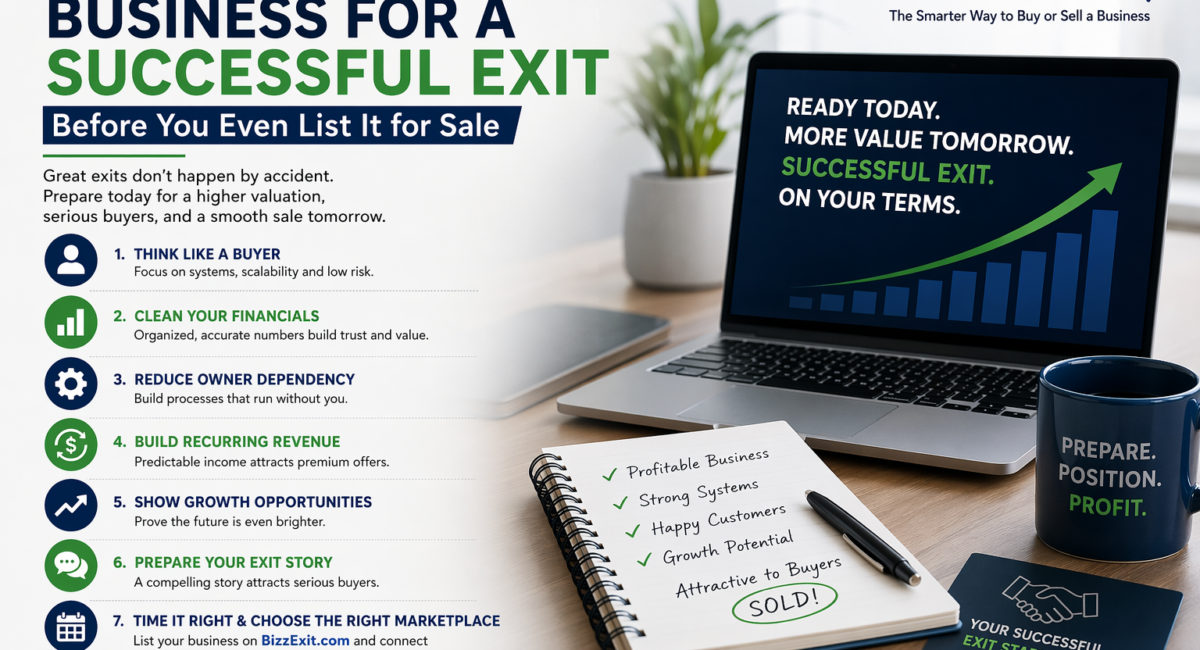
How to Prepare Your Business for a Successful Exit (Before You Even List It for Sale)
Selling a business is one of the biggest financial and emotional decisions an entrepreneur will ever make. Yet many owners only start preparing when they feel ready to sell — which is often too late to maximize value.
If you want a smooth deal, higher valuation, and serious buyers, preparation should begin months or even years before listing your company for sale on platforms like BizzExit.com, where thousands of entrepreneurs actively look for acquisition opportunities.
Here’s how smart founders prepare their business for a successful exit.
Why Most Businesses Sell for Less Than They Should
A common mistake business owners make is assuming buyers will see the same value they do.
But buyers don’t purchase passion.
They purchase predictable profit, low risk, and growth potential.
The biggest deal killers usually include:
- Owner dependency
- Messy financials
- Unclear growth strategy
- Legal or operational risks
- Poor documentation
The good news? All of these can be fixed.
Step 1 — Start Thinking Like a Buyer
Before selling, shift your mindset from operator to investor.
Ask yourself:
- Would I buy this business if I saw it today?
- Could it run without me?
- Is revenue predictable and scalable?
- Are risks documented and controlled?
Buyers browsing acquisition marketplaces aren’t looking for a job — they want a systemized business.
Step 2 — Clean and Organize Your Financials
Your financial records are the first thing serious buyers examine.
At minimum, you should prepare:
- 2–3 years of profit & loss statements
- Balance sheets
- Cash-flow statements
- Tax filings
- Revenue breakdown by product/service
If your finances are unclear, buyers assume risk — and risk reduces price.
Professional bookkeeping and clear reporting can significantly increase your valuation before listing.
Step 3 — Reduce Owner Dependency
One of the biggest value boosters is proving the business can run without you.
Buyers worry about:
- Key relationships tied only to the owner
- The owner being the main salesperson
- Knowledge stored “in the owner’s head”
Start documenting:
- Standard operating procedures (SOPs)
- Sales scripts
- Supplier relationships
- Customer onboarding processes
A business that runs independently attracts more buyers and stronger offers.
Step 4 — Build Recurring & Predictable Revenue
Predictable income is gold for buyers.
Examples of high-value revenue models:
- Subscriptions or memberships
- Long-term contracts
- Retainer clients
- Repeat customers
Even small increases in recurring revenue can significantly boost valuation multiples.
Step 5 — Identify and Show Growth Opportunities
Buyers aren’t just purchasing past performance.
They’re buying future potential.
Prepare a simple growth roadmap showing opportunities such as:
- New markets or locations
- Untapped marketing channels
- Product expansion
- Pricing optimization
- Operational efficiencies
Listings that clearly communicate growth potential tend to perform better and generate more buyer interest.
Step 6 — Prepare Your Exit Story
Every successful business sale has a compelling narrative.
Your story should answer:
- Why is the business being sold?
- What makes it unique?
- What opportunities exist for a new owner?
- Why is now the perfect time to acquire it?
A strong story builds trust and helps your listing stand out.
Step 7 — Choose the Right Marketplace
Where you list your business matters just as much as how you prepare it.
Specialized platforms like BizzExit.com connect business owners with serious buyers, investors, and acquisition entrepreneurs actively searching for opportunities.
Listing in the right marketplace dramatically increases visibility and shortens the time to sale.
Final Thoughts: Great Exits Are Planned, Not Rushed
A successful business sale rarely happens by accident.
Owners who prepare early:
- Sell faster
- At higher valuations
- With fewer complications
- And with better deal terms
If you’re even considering selling in the next few years, the best time to start preparing is today.
Because the best buyers are looking for businesses that are ready, not risky.